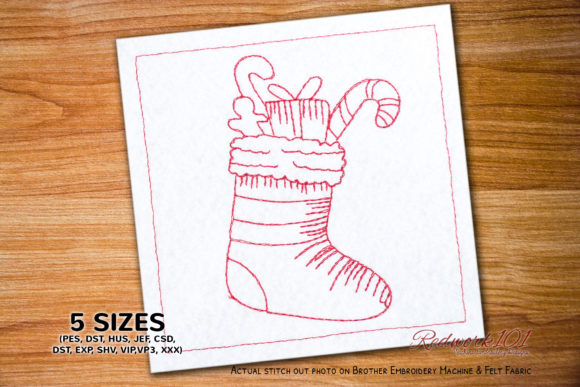
Christmas Stocking Lineart Design
A Practical Review for Small Business Embroidery Use
As an embroidery designer who’s developed hundreds of machine embroidery designs for small businesses—from neighborhood bakeries and indie florists to pet boutiques and handmade studios—I approached the Christmas Stocking Lineart Design with a very specific lens: not just “does it look festive?”, but “will this hold up on staff aprons, retail patches, and customer-facing merchandise?” The answer is yes—but with smart, intentional application.
First Impression: Clean, Versatile, and Professionally Handmade
The title alone tells you what matters most: lineart. This isn’t a dense, fill-heavy holiday motif—it’s a confident outline, likely built for clarity at scale. That makes the Christmas Stocking Lineart Design feel simultaneously classic and modern: friendly enough for a children’s toy shop, refined enough for a luxury candle brand’s holiday tote bag, and bold enough to anchor a café’s embroidered cap front. There’s no visual noise—no gradients, no tiny ornaments crowding the silhouette—so it reads instantly, even from across a farmers’ market stall or boutique counter.
Real-World Performance Across Merchandise Types
In my studio, I test every design across six high-frequency business uses. Here’s how the Christmas Stocking Lineart Design performs:
- Embroidered patches: Excellent. Its clean perimeter and open interior mean low stitch density and minimal thread buildup—ideal for iron-on or sew-on patches on denim jackets, gift bags, or staff lanyards.
- Staff uniforms & aprons: Highly effective as a chest accent or sleeve detail. Because it’s line-based—not filled—it avoids stiffness on cotton twill or canvas, preserving comfort during long shifts.
- Cap embroidery: Works well on structured front panels (6–8 inch hoops), especially when scaled to 3.5–4 inches wide. Avoid placing it on curved back panels unless digitized with gentle underlay adjustments.
- Tote bag design & product packaging accents: Stands out beautifully on natural canvas or kraft paper tags. Its simplicity ensures legibility even when stitched in monochrome thread on textured fabric.
- Boutique merchandise & Etsy branding: Serves double duty—as both seasonal charm and subtle brand reinforcement. When paired with your logo on a holiday gift set, it signals care without overwhelming your identity.
- Printable mockups & client presentations: Translates flawlessly into digital previews. Its lineart nature means crisp vector exports and sharp PNGs for social media, email campaigns, or wholesale catalogs.
Where to Apply Caution
Even strong lineart has limits. Use the Christmas Stocking Lineart Design thoughtfully in these scenarios:
- Small patch sizes (under 1.75”): Fine lines may merge or lose definition. Always test at final size—especially if stitching on velour, fleece, or terry cloth.
- Curved surfaces (like cap bills or rounded mugs): The design wasn’t described as contoured, so avoid stretching it over extreme curves without re-digitizing.
- Dark uniforms or textured fabric: Thread color contrast becomes critical. A light gold or cream thread on navy twill reads beautifully—but avoid pale pastels on black without testing stabilizer + topstitch combo.
- Frequent-wash items (e.g., kitchen aprons, pet bandanas): Confirm the digitization uses secure run stitches and appropriate underlay. Lineart holds up well—but only if properly stabilized and hooped.
Brand Identity Impact: More Than Just Holiday Cheer
This isn’t just decoration—it’s brand language. The Christmas Stocking Lineart Design strengthens trust because it feels intentional, not generic. Customers notice when a local florist adds it to their holiday bouquet wrap tags or when a pet brand stitches it onto adoption kit totes. It says: We invest in thoughtful details. We celebrate with our community—not just sell to it.
For handmade product sellers, it elevates perceived value. A minimalist stocking stitched beside your logo on a linen tea towel reads more premium than a busy clipart-style motif. And for Etsy sellers building cohesive seasonal collections, it offers visual consistency across patches, apparel, and packaging—without locking you into one rigid style.
Practical Designer Notes Before You Stitch
Before sending the Christmas Stocking Lineart Design to production—or offering it to clients—follow these non-negotiable steps:
- Test it in black and white first: Does the shape read clearly without color cues?
- Check its performance at your smallest intended patch size (e.g., 2” wide) on actual fabric—don’t rely solely on screen zoom.
- Review thread color contrast: Will your chosen thread pop against the base fabric? Run a quick swatch on scrap material.
- Inspect spacing: Are inner negative spaces large enough to prevent thread bridging on lightweight fabrics?
- Confirm hoop size compatibility: Does it fit comfortably within your standard embroidery frame—or does it require re-hooping mid-stitch?
- Use proper stabilizer: Tear-away works for stable cotton; cut-away adds durability for stretchy or high-wear items.
- Create a physical mockup for client approval: A real stitched sample builds confidence faster than any digital proof.
- Compare it beside your other design assets: Does it harmonize with your logo, fonts, and existing holiday motifs—or clash visually?
- Confirm commercial licensing: Since this is a digital embroidery file intended for small business merch, verify usage rights cover resale, branded patches, and client projects.
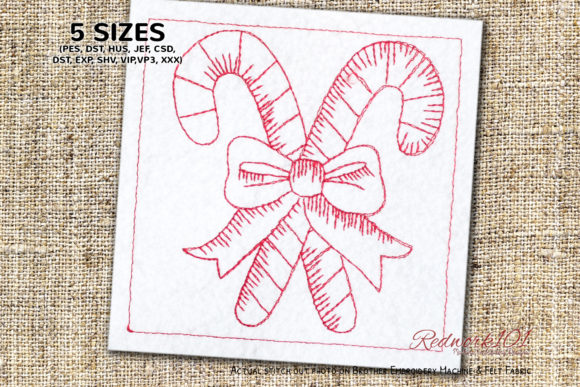
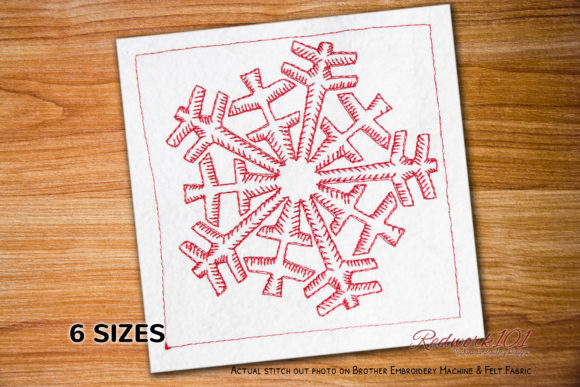
Remember: The “Box Stitch shown in picture is optional” note is key. That outer box isn’t part of the core design—it’s a framing device, likely added for presentation. In production, skip it unless it serves your brand’s aesthetic (e.g., a vintage apothecary label). And “the color of outer Box is different color in most of the designs unless it is part of the design itself”—so treat that box as purely decorative, not structural.
Ultimately, the Christmas Stocking Lineart Design earns its place in your commercial embroidery toolkit not because it’s flashy, but because it’s functional, flexible, and quietly confident. For small business owners building authentic connections through custom apparel and branded patches, that’s exactly the kind of design that delivers ROI—long after the tinsel comes down.