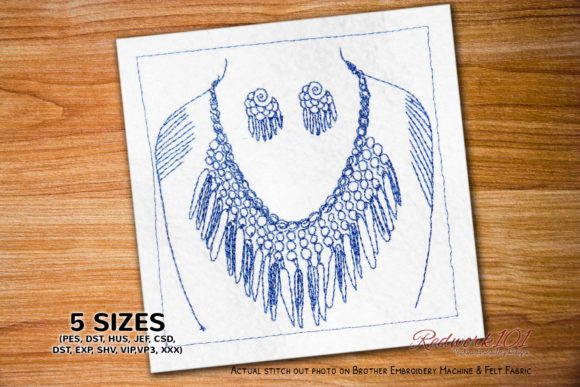
African Jewelry Design Redwork
First Impressions: Bold, Cultural, and Thoughtfully Handmade
As an embroidery designer who’s tested hundreds of digital embroidery files for gift shops and Etsy sellers, African Jewelry Design Redwork immediately stood out—not with flashiness, but with quiet confidence. It carries a warm, grounded elegance that feels both timeless and intentional. The redwork technique—clean, single-outline stitching in rich red thread against natural or light fabric—gives it an authentic handmade charm. It’s not overly delicate or fussy; instead, it reads as strong, symbolic, and culturally resonant. Customers drawn to meaningful personalization—especially those celebrating heritage, new life, or milestone moments—will connect with its sincerity. It leans classic rather than trendy, romantic without being saccharine, and artisanal without sacrificing clarity.
Where This Design Truly Shines
African Jewelry Design Redwork is exceptionally versatile across personalized gift categories. On a soft cotton baby blanket? It adds heirloom warmth without overwhelming tiny proportions. Stitched onto a linen kitchen towel? It elevates everyday utility into something display-worthy—ideal for bridal showers or housewarming gifts. As a wedding keepsake on a pillow cover or embroidered tote bag, it quietly honors cultural roots while fitting seamlessly into modern decor. For nursery items—think crib sheets, wall hangings, or framed hoop art—it balances visual interest with soothing simplicity. Even on an apron or custom tote for a small shop product, it communicates care and intentionality. Etsy sellers will find it performs beautifully in listings: the clean lines photograph crisply, and the redwork contrast pops in natural light, boosting buyer engagement and perceived value.
Perfect for These Personalized Gift Applications:
- Baby embroidery (blankets, onesies, milestone banners)
- Wedding gift (pillow covers, guest book sleeves, ring bearer pillows)
- Family keepsakes (framed hoops, memory quilts, generational towels)
- Embroidered towel and kitchen linens (dish cloths, hand towels, oven mitts)
- Nursery decor (wall art, mobile accents, crib rail covers)
- Tote bags and aprons for boutique or craft fair sales
- Custom order previews—clients instantly “see” the emotional weight and craftsmanship
Where to Use African Jewelry Design Redwork With Care
This design rewards thoughtful placement—but like any quality machine embroidery design, it has boundaries. Avoid using it where fine detail could blur or distort: think small lettering (it’s not a font-based file), tightly curved surfaces like mug cozies, or stretchy baby bodysuits unless stabilized *very* carefully. Thick terry cloth towels demand extra stabilizer and possibly reduced stitch density to prevent puckering—test first. Dark fabrics require careful thread color selection; true redwork relies on contrast, so consider switching to burgundy, rust, or even navy if stitching on charcoal or black. And while the optional outer box stitch adds framing polish, remember: the box color is often distinct and customizable—skip it entirely if it clashes with your fabric or brand palette. Always confirm whether the box is integral to the design before finalizing a layout.
How It Elevates Your Handmade Product & Customer Trust
Customers don’t just buy embroidered items—they buy meaning, trust, and perceived quality. African Jewelry Design Redwork supports all three. Its cultural resonance invites storytelling in product descriptions (“Inspired by West African adinkra motifs,” “Stitched with reverence for ancestral artistry”), deepening emotional connection. Because redwork implies hand-guided precision—even when machine-stitched—it signals authenticity to discerning buyers. That translates directly to higher perceived value: a $28 embroidered towel feels like a $45 heirloom when anchored by this design. In photography, its bold outline ensures sharp thumbnails and scroll-stopping detail on Etsy or Instagram. For small shop owners and wedding gift designers, it’s a subtle differentiator—proof you curate designs with narrative depth, not just visual appeal.
Practical Embroidery Notes You Can’t Skip
Before stitching your first customer order, run these checks:
- Test on scrap fabric—especially if using textured linen, thick terry, or blended cotton-poly.
- Verify thread color contrast on both light and dark mockups. Redwork loses impact if thread blends in.
- Confirm hoop size compatibility. If the outer box is included, measure total dimensions—some versions may exceed standard 4x4 hoops.
- Review stitch density. Dense fills can overwhelm lightweight fabrics; adjust if needed for baby items or delicate linens.
- Use appropriate stabilizer: cutaway for knits or stretchy fabrics, tear-away for stable wovens, and heavy-duty for towels.
- Check small details post-stitch: ensure crisp corners on geometric elements and smooth curves on jewelry-inspired shapes.
- Confirm commercial licensing before selling finished products. Since this is a digital embroidery file intended for resale use, verify usage rights with the original seller—especially for high-volume small shop production.
Final Thought: A Design That Grows With Your Shop
African Jewelry Design Redwork isn’t just another embroidery file—it’s a quiet investment in your brand’s storytelling power. Whether you’re an Etsy seller launching your first curated collection, a baby product creator building a signature line, or a wedding gift designer seeking timeless motifs, this design bridges aesthetics and intention. It works as well on a $12 custom tea towel as it does on a $120 framed nursery keepsake. And because it avoids seasonal clichés and leans into enduring symbolism, it stays relevant year after year—no rebranding, no trend-chasing. Just honest, beautiful, culturally grounded custom embroidery, ready to make your next personalized gift unforgettable.