Little Mouse and Banner: A Designer’s Real-World Embroidery Review
As someone who’s stitched hundreds of machine embroidery designs for client work, Etsy shops, boutique baby lines, and custom apparel—this is how I approach Little Mouse and Banner: not as a download, but as a design asset with real-world consequences. Last week, I used it to embroider a set of organic cotton baby burp cloths for a local nursery boutique. That test told me more than any product page ever could.
First Impression: Sweet, Simple, and Surprisingly Versatile
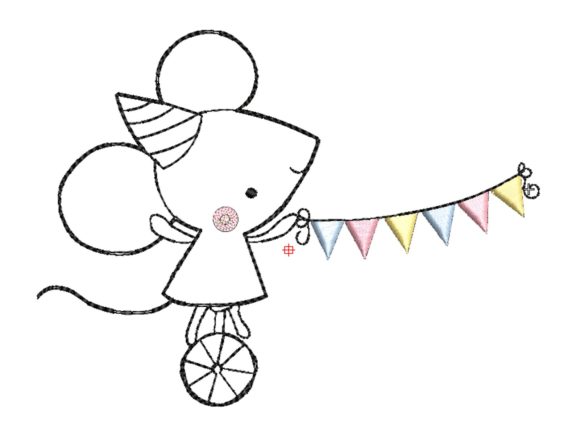
Little Mouse and Banner lands softly—not loud or flashy, but quietly confident in its charm. The mouse is round-faced and gentle, with subtle whiskers and soft curves; the banner beneath holds clean, legible lettering (though no specific text is included—so you’ll need to add your own name, date, or phrase). It reads as Baby Animals, yes—but also as timeless nursery decor, thoughtful baby shower gift, or even a quiet holiday accent on a linen tea towel.
The layout feels intentional: the mouse sits comfortably above the banner, leaving breathing room for stitching without crowding. There’s no excessive detail—no tiny eyes to vanish in fill stitch, no fragile limbs that’ll fray after three washes. That restraint is a strength, not a limitation. It means Little Mouse and Banner scales well across fabric types and project sizes.
Where It Shines—and Where It Needs Care
I’ve run this design on t-shirts, lightweight sweatshirts, structured tote bags, and even a curved cap brim (with stabilizer adjustments). Here’s what stood out:
- Custom apparel: Works beautifully on crewneck sweatshirts—especially with tonal thread on heather grey. The satin-stitched mouse outline holds crispness, and the banner’s straight edges stay sharp.
- Baby embroidery: On bamboo-cotton blends and interlock knits, it stitched cleanly at medium density—no puckering, no skipped stitches. Parents notice the softness first; then they see the care in the details.
- Tote bag design: At 3.8" wide, it anchors nicely on the front pocket of a medium canvas tote—neither lost nor overwhelming. Paired with a simple monogram or birth date in the banner, it becomes a signature piece for a small shop product.
- Holiday embroidery: Swap thread colors to forest green and cream, add a tiny embroidered holly sprig beside it, and suddenly it’s a sweet Christmas keepsake—ideal for handmade ornaments or stocking stuffers.
But let’s be honest: Little Mouse and Banner isn’t magic. It needs thoughtful execution. On thin, stretchy fabrics like jersey or lightweight rayon, I recommend a light cutaway stabilizer—not just tear-away—to prevent distortion around the banner’s straight edges. And if you’re stitching on dark fabric, test contrast early: light ecru thread on navy looks warm and artisanal; white can glare unless balanced with a subtle underlay.
Design Integrity Meets Customer Trust
When a customer orders a personalized gift—say, a “Sophie’s First Easter” embroidered pillow cover—they’re buying more than thread and fabric. They’re buying confidence in your craft. Little Mouse and Banner supports that trust because it avoids common pitfalls: no over-dense fill areas that sink into plush fabric, no micro-details that blur on textured weaves, and no jagged corners that snag during wear.
That clarity translates directly to perceived value. A well-executed Little Mouse and Banner on a linen kitchen towel doesn’t look like a digital embroidery file—it looks like a considered, handmade product. For Etsy sellers and craft fair vendors, that distinction matters. Buyers scroll past generic clipart; they pause for warmth, consistency, and intentionality—and this design delivers that when stitched with care.
Practical Notes Every Embroidery Designer Should Check
Before committing to a batch run—or listing a finished product online—here’s my checklist for Little Mouse and Banner:
- Test on scrap fabric first, especially if using textured or stretchy material. Watch how the banner’s horizontal lines behave near seams or curved edges.
- Review stitch density. If your machine defaults to high-density settings, dial it back slightly—the mouse’s body doesn’t need heavy fill to read clearly.
- Confirm hoop size. This design fits comfortably in a 4x4 hoop, but double-check your file’s actual dimensions before nesting multiple units on a larger hoop.
- Inspect small details in your embroidery software: are the mouse’s ears fully digitized? Is the banner’s inner edge smooth, or does it show stitch jumps?
- Test black-and-white mockups alongside color versions—some buyers browse in grayscale, and contrast must hold.
- Compare light and dark fabric backgrounds. Try it on oatmeal linen and charcoal twill side-by-side to assess thread color choices.
- Use proper stabilizer—especially for commercial embroidery on layered garments like reversible zip-ups or quilted jackets.
- Verify licensing before selling finished items or bundling it into digital product previews. This listing confirms it’s a machine embroidery design, not a physical patch—but usage rights for resale aren’t stated here, so always confirm with the seller.
Final Thought: A Quiet Workhorse, Not a Flashy Gimmick
Little Mouse and Banner won’t go viral on social media—but it will earn repeat orders from customers who value subtlety, durability, and sincerity in their handmade products. It’s the kind of embroidery file that disappears into the fabric of daily life: on a baby’s onesie, a teacher’s apron, a holiday mug cozy, or a boutique’s limited-run tea towel collection. It doesn’t shout. It belongs.
For craft business owners and Etsy sellers building a recognizable aesthetic, this design works as a consistent visual anchor—especially when paired with complementary applique design elements or coordinating running stitch borders. It’s not trend-driven. It’s time-tested in spirit, even if digitally born.
If you’re evaluating Little Mouse and Banner for your next embroidery project, ask yourself: Does it serve the product—not just the machine? Does it enhance the handmade presentation without competing with it? Will it still feel right six months from now, after dozens of washes and gentle use?
For me, the answer was yes—every time.