Bunny Ballerina 1: A Craft Fair-Ready Embroidery Design
First Impression: Sweet, Playful, and Instantly Recognizable
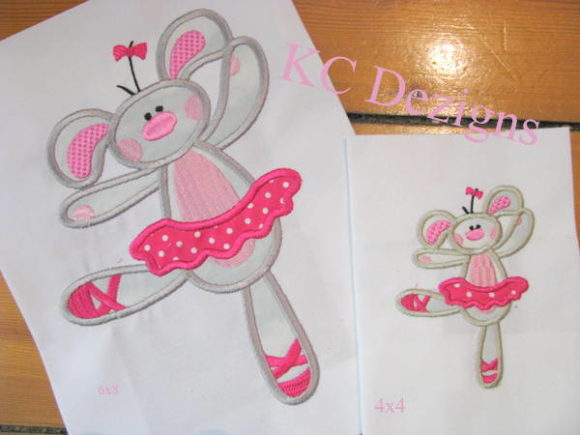
As an embroidery designer who’s prepped over 200 craft fair booths in the past decade, my gut reaction to Bunny Ballerina 1 is immediate: it’s a smile-getter. The name alone — “Bunny Ballerina” — lands with soft charm and gentle whimsy. It’s not edgy or ironic; it’s warm, approachable, and deeply handmade in spirit. For a Boys category design, it avoids cliché — no trucks, dinosaurs, or loud graphics — instead offering quiet personality and story-driven appeal. Think cottagecore meets ballet class, with just enough sweetness to draw parents, grandparents, and gift-givers across a crowded market aisle.
Where Bunny Ballerina 1 Shines on Craft Fair Products
This machine applique embroidery design performs strongest when placed where contrast and character matter most. On a natural canvas tote bag? Yes — especially one in oat, sage, or dusty rose. The bunny’s rounded silhouette reads clearly from three feet away, and the ballerina pose adds graceful movement that stands out beside bolder, busier designs.
For apron embroidery, Bunny Ballerina 1 works beautifully centered above the pocket — large enough to read but not overwhelming. On tea towel embroidery, it shines best on the lower corner or folded edge, where its delicate shape complements kitchen warmth without competing with functional text or logos.
As an embroidered patch? Excellent. Its clean outer edge and defined applique layers hold up well through laundering and iron-on application. On fabric pouches and small pillow covers, it’s a standout — small enough for intimate scale, yet detailed enough to reward close inspection. And for caps? Use caution: the pose relies on balanced proportions, so test stitch density and placement on curved surfaces before committing to batch production.
What Makes It Sell — and What Requires Care
Bunny Ballerina 1 succeeds because it feels intentional, not generic. Customers pause longer at products where the design tells a tiny story — and this one does. At a craft fair, that pause often becomes a purchase. It photographs exceptionally well for Etsy listings and printable mockups: soft lighting highlights the applique texture, and thread colors pop against light or mid-tone fabrics.
But here’s the real talk: as a machine applique embroidery design, clarity depends heavily on execution. Tiny details — like the curve of the ear or the bow’s knot — can blur if stitch density is too high or stabilizer is underused. Avoid dense thread builds in tight areas; they’ll stiffen fabric and mute the design’s softness. On textured towels or thick twill, always use cutaway stabilizer — not tear-away — to prevent puckering around the applique edge.
Dark fabric demands thoughtful thread colors. Test contrast first: pale pinks or creams may disappear on navy or charcoal unless you add a subtle white underlay. And if you’re scaling down for tags or mini pouches, know your limit — below 3 inches wide, some features (like the ballet slipper detail) risk becoming indistinct. Always check the original embroidery file’s recommended minimum size before shrinking.
Booth Impact, Brand Alignment, and Buyer Connection
In a booth full of handmade product variety, Bunny Ballerina 1 adds tonal balance. It softens rugged denim totes, brings joy to utilitarian aprons, and elevates simple tea towels into giftable items. It supports brand consistency for makers who lean into gentle aesthetics — think “slow stitching,” “thoughtful gifting,” or “whimsical heirlooms.”
Buyers engage differently with this design. Parents don’t just see “cute.” They see a character their child might love — one that feels kind, creative, and calm. That emotional resonance translates directly to higher perceived value. A $28 embroidered pillow cover with Bunny Ballerina 1 feels more special than one with a generic floral motif — especially when stitched cleanly and presented with matching packaging or a handwritten tag.
Practical Designer Notes Before You Stitch
- Always test the embroidery file on scrap fabric — same type and weight as your final product.
- Review thread colors in natural light; monitor screens lie. Choose shades that harmonize, not clash.
- Confirm hoop size compatibility early — applique designs often require larger hoops for smooth layering.
- Inspect stitch density manually: look for overlapping satin stitches or excessive underlay that could cause stiffness.
- Use the right stabilizer — medium-weight cutaway for knits, lightweight tear-away for stable cottons.
- Create at least one real mockup before launching — not just a digital preview. See how it drapes, wears, and catches light.
- Compare fabric colors side-by-side: ivory thread on cream linen reads differently than on off-white canvas.
- Verify commercial licensing terms before selling finished product — this is a digital embroidery file intended for commercial embroidery, but usage rights must be confirmed with the source.
Final Thought: A Design That Earns Its Place
Bunny Ballerina 1 isn’t just another embroidery file — it’s a craft fair asset. It’s repeatable for batch production without feeling mass-produced, versatile enough for multiple product types, and emotionally resonant enough to spark conversation at your booth. For Etsy sellers, small shop owners, and boutique makers building a curated collection, it fills a meaningful niche: joyful, gender-inclusive, and quietly sophisticated. Just remember — its charm lives in the details, so stitch with care, test with intention, and let its sweetness speak for itself.