4th July Flip-Flops
A Designer’s First Look: Charm, Clarity, and Craftsmanship
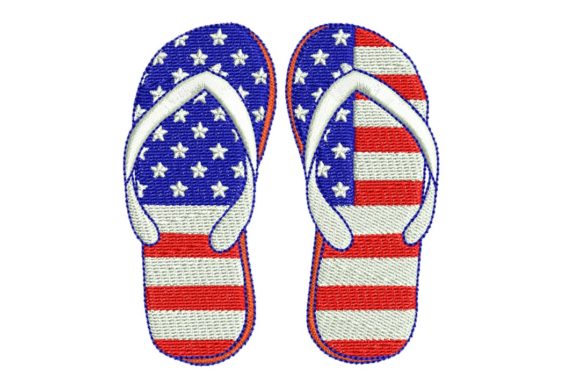
As an embroidery designer who’s tested hundreds of holiday-themed files for gift shops and Etsy sellers, I opened the 4th July Flip-Flops design with genuine curiosity — and was immediately struck by its warm, lighthearted energy. It’s not overly patriotic or loud; instead, it balances playful summer ease with quiet Independence Day spirit. Think red-white-and-blue flip-flops adorned with tiny stars, subtle stripes, and a gentle hand-drawn quality that reads as authentically handmade. There’s no aggressive script or heavy metallics — just clean lines, balanced proportions, and thoughtful spacing. That makes it ideal for customers seeking personalized gifts that feel joyful but not juvenile, festive but not fleeting.
Where This Design Truly Shines
The 4th July Flip-Flops machine embroidery design excels where personality meets practicality. For baby embroidery? Stitch it onto a soft cotton receiving blanket or a gauzy swaddle — the scale works beautifully at 4×4, and the cheerful motif adds sweetness without overwhelming delicate nursery aesthetics. As a wedding gift? Embroider it onto linen napkins or a rustic burlap tote for a couple hosting a backyard celebration — it signals celebration while staying grounded in warmth and authenticity.
For small shop owners and Etsy sellers, this design is a versatile anchor for seasonal collections. Try it on:
- Embroidered towels (kitchen or beach-ready)
- Pillow covers for patio or porch decor
- Custom aprons for food trucks or home bakers
- Blanket embroidery for new parents welcoming a July baby
- Tote bags sold at craft fairs or farmers’ markets
- Nursery wall hangings paired with coordinating star motifs
What sets 4th July Flip-Flops apart is how naturally it invites emotional connection. A customer ordering it for a first birthday or family reunion isn’t just buying a holiday motif — they’re choosing nostalgia, ease, and shared summer memories. That resonance lifts perceived value and encourages repeat buyers.
Smart Placement & Fabric Considerations
While charming, 4th July Flip-Flops isn’t universally forgiving — and that’s okay. As a designer, I always advise testing before committing to client orders. Here’s where to proceed thoughtfully:
- Small lettering or fine details: The design doesn’t include intricate text, but if you’re adding custom names or dates, keep font size above 8 pt and test legibility on your target fabric.
- Textured fabric: Avoid dense terry cloth or heavily napped fleece unless you stabilize aggressively — stitch definition can blur on uneven surfaces.
- Stretchy baby clothes: Not ideal for onesies or bodysuits without proper cutaway stabilizer and precise hooping — the flip-flop shape may distort under tension.
- Curved surfaces: Skip baseball caps or rounded mugs — stick to flat or gently contoured items like pillow fronts or tote panels.
- Dark fabric: Always check thread color contrast. Red and navy blue pop beautifully on light backgrounds, but consider switching to brighter white or silver metallic thread for visibility on charcoal or black.
- Frequent washing: Use high-quality polyester thread and secure backstitching — especially around star points — to maintain crispness across multiple launderings.
How It Elevates Your Handmade Product
For gift shop owners and digital embroidery sellers, 4th July Flip-Flops does more than fill a seasonal slot — it strengthens buyer trust. Its balanced stitch density suggests professional digitizing, not rushed clipart conversion. When photographed on a well-chosen finished product — say, a linen pillow cover with natural light and a striped background — it communicates care, intention, and handmade quality. That visual clarity boosts engagement on Etsy listings and social media previews.
Customers browsing for personalized gifts respond to designs that feel *designed*, not assembled. 4th July Flip-Flops delivers that through intentional negative space, consistent line weight, and cohesive color rhythm. It also pairs effortlessly with complementary elements: a single star, a simple “Celebrate” banner, or even a minimalist American flag corner accent — all without competing.
Essential Embroidery Notes Before You Stitch
Before stitching your first 4th July Flip-Flops piece for sale, follow these practical steps:
- Test on scrap fabric that matches your final product — same weight, weave, and stretch.
- Confirm hoop size compatibility: The design supports both 4×4 and 5×7 hoops — choose based on your product’s real estate and desired impact.
- Review stitch density visually in your embroidery software — look for tight clusters that might cause puckering on lightweight fabrics.
- Select stabilizer wisely: Tear-away for stable cottons, cutaway for knits or towels, and water-soluble for delicate lace overlays.
- Compare light/dark fabric mockups using printable mockup templates — lighting and thread choice dramatically affect perceived polish.
- Inspect small details post-stitch: Stars and strap curves should be sharp and symmetrical — any distortion means re-hooping or stabilizer adjustment is needed.
- Verify commercial licensing before selling finished products — confirm the digital embroidery file permits resale of embroidered goods.
Remember: the best personalized gift isn’t just stitched — it’s considered. Every time you use 4th July Flip-Flops on a kitchen towel, baby blanket, or wedding keepsake, you’re offering more than embroidery. You’re offering a moment of summer joy, a nod to tradition, and a handmade promise — one thoughtful stitch at a time.