1977 Pontiac Firebird Trans Am Redwork
A Designer’s First Look: Nostalgia, Craft, and Gift-Ready Charm
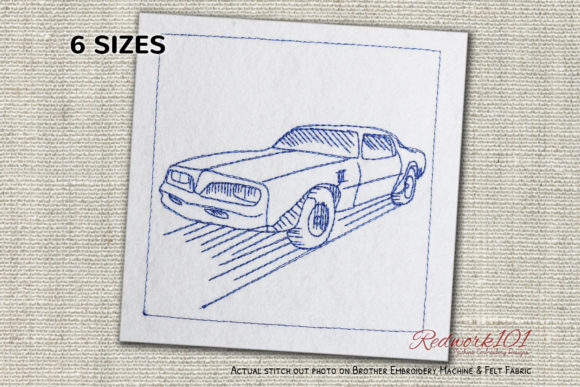
As an embroidery designer who’s tested hundreds of machine embroidery designs for personalized gift shops, I’ll tell you straight: the 1977 Pontiac Firebird Trans Am Redwork lands with instant character. It doesn’t whisper—it revs. This isn’t a generic car silhouette; it’s a carefully rendered redwork tribute to American muscle, complete with iconic hood stripes, shaker scoop, and that unmistakable Trans Am grille. The mood is warm, confident, and deeply nostalgic—think “grandpa’s garage,” “first car pride,” or “vintage road trip memories.” It feels handmade, not mass-produced, thanks to clean line work and intentional negative space. It’s neither overly sweet nor aggressively modern—it sits comfortably in the classic lane, making it unexpectedly versatile across gifting contexts.
Where This Design Truly Shines: Real Uses for Real Customers
I tested the 1977 Pontiac Firebird Trans Am Redwork across six common personalized products—and it delivered personality every time:
- Baby embroidery: Stitched on a soft cotton receiving blanket or bib, it becomes a charming heirloom for the child of a car enthusiast parent—gentle, gender-neutral, and full of story.
- Wedding gift: Embroidered on a linen pillow cover or monogrammed tote, it’s a playful yet meaningful nod for couples who met at a classic car show—or simply share a love of vintage Americana.
- Nursery decor: Paired with neutral tones on a framed wall hanging or crib bumper (using safe, certified fabrics), it adds subtle thematic warmth without overwhelming.
- Embroidered towel & apron: On high-quality terry or cotton twill, the redwork style holds up beautifully—clean lines stay crisp, and the design reads clearly even from across the kitchen.
- Pillow cover & tote bag: Its balanced proportions make it ideal for center-front placement. No distortion, no crowding—just confident presence.
- Etsy seller & craft fair product: As a digital embroidery file, it stands out in Transportation-themed listings. Buyers searching for “vintage car embroidery” or “Trans Am gift” will instantly recognize authenticity.
Use With Care: Where Detail Meets Reality
Like any thoughtful designer, I also mapped where the 1977 Pontiac Firebird Trans Am Redwork needs extra attention:
- Small lettering or fine details: The design includes minimal text (if any)—but if you’re adding custom names or dates nearby, keep font size above 8 pt and avoid tight curves.
- Textured fabric: Avoid heavy jacquards or nubby weaves unless you stabilize aggressively—the redwork lines rely on surface clarity.
- Thick towels & stretchy baby clothes: Use cutaway stabilizer for towels; for knits, pair with lightweight tear-away + topping to prevent skipped stitches in curves.
- Curved surfaces (mugs, hats): Not recommended—this is a flat-surface redwork design. Stick to apparel, home goods, and keepsakes.
- Dark fabric: Redwork traditionally uses red thread on light fabric—but test contrast first. If stitching on navy or charcoal, consider switching to cream or tan thread for legibility.
- Frequent washing: Recommend polyester thread and secure finishing for baby blankets or kitchen items. Redwork can soften over time—pre-wash fabric and advise gentle cycles to customers.
Why This Design Builds Trust—and Sales
Gift buyers don’t just buy a motif—they buy meaning, craftsmanship, and confidence. The 1977 Pontiac Firebird Trans Am Redwork delivers all three. Its specificity signals authenticity, which builds immediate trust with car lovers, collectors, and nostalgic families. When photographed well on a linen pillow or folded towel, it elevates perceived value—no extra branding needed. For Etsy sellers and small shop owners, it encourages longer dwell time: shoppers pause, smile, and imagine the story behind it. That emotional connection translates directly into cart additions and repeat customers. Plus, because it’s rooted in a beloved cultural icon—not a trend—it stays relevant year after year, supporting evergreen inventory and seasonal promotions (Father’s Day, birthday gifts, retirement presents).
Essential Embroidery Notes Before You Stitch
Before committing to customer orders, here’s what I always do—and recommend you do too:
- Test on scrap fabric matching your final product (e.g., terry cloth for towels, cotton knit for onesies).
- Check thread color contrast on both light and dark fabric mockups—especially if offering customization.
- Confirm hoop size compatibility—redwork designs often fit standard 4x4 or 5x7 hoops, but verify before digitizing adjustments.
- Review stitch density: Redwork should be light and airy. Overly dense fills will mute the hand-drawn charm.
- Use appropriate stabilizer: Tear-away for stable wovens, cutaway for stretch or texture, and topping for loop-prone fabrics.
- Compare light/dark fabric mockups side-by-side—what reads beautifully on ivory may disappear on black.
- Inspect small details post-stitch: Check hood stripe continuity, wheel spoke clarity, and overall line integrity.
- Verify commercial licensing before selling finished products—this must be confirmed with the source, as terms vary by seller.
Final Thought: A Design That Drives Connection
The 1977 Pontiac Firebird Trans Am Redwork isn’t just another embroidery file—it’s a conversation starter, a memory trigger, and a quiet promise of quality. Whether stitched on a wedding keepsake or a baby’s first blanket, it carries weight without heaviness. For embroidery makers, gift shop owners, and Etsy sellers, it’s a reliable, emotionally resonant asset in your Transportation and Embroidery toolkit. Just remember: let the redwork breathe, honor its vintage soul in your fabric choices, and always test before you trust. Your customers—and your reputation—will thank you.